The Editors – Follow the Money

Public education is failing in Los Angeles. The stories are legion, the statistics are glum, and a lot of money is already spent on a system that should be doing a lot better for the students and families of this city.

Few large American cities – and in fact few medium-sized or small American cities – are doing much better. In New York City, one former schools Chancellor recalls getting a call from a famous billionaire who told him that he and a group of similar plutocrats had decided to put on the table whatever it would take to fix the schools. “This is historic. We’re willing to put a billion dollars into this. Nothing can resist the force of a billion dollars.”

Well, not really. The punchline of this story is that the New York City public school system was already spending over twenty billion dollars on just doing what it usually does, that very year. Five percent more would make little difference.

What we wonder about is where the big red “RE-SET” button is. Where do we sign up to start the whole system over?

That’s a big part of the magic of the charter school movement, a movement that is so clearly slowing down as it gets bigger and older. It’s losing its tremendous value as a small and fragmented – but real – form of resetting the system one school at a time.

There’s got to be a better way. Not to start where we are and make a change on the margins – even a billion-dollar change – but a way to take out a clean sheet of paper to start over. It’s clearly time.
Randall Bloom – Poem (“If When I See It I Know It”)

If when I see it I know it then

I’ll know that I’m far from home


because the sights here and the things

we never see leave me always wanting


more. I mean, desire for change, really,

is a wanting more than what we want just


for one, two,

three of us, but for all of us and actually


not just us but them too, should there really be

a them, a line across the way, a line we cross when


we become something else,

or far from home

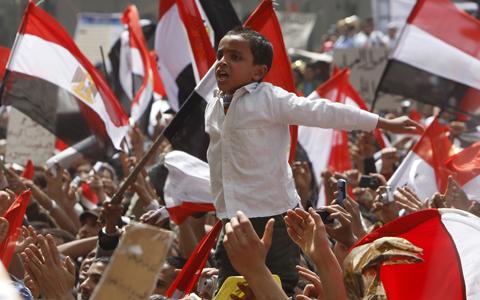
Reuters – Photo (Child in Cairo)

The Editors – Spending and Consent

We note the budget compromise in Washington today without pleasure and without much regard for the work and the workers behind it. It is far better than what might have happened, but that is a low standard for a nation that has done so much better, so many times.

Not spending what we do not have is wise. Making a transition to that footing carefully and with regard for the experience of the people who will be hurt by it is morally necessary, to say nothing of the need to keep an eye on the consent of the governed, as the Declaration of Independence demands.

And we ask for some reflection on that word, “governed.” The just powers of the American government derive, we have read, not from the consent of Congress, or even the consent of the voters, but from the consent of the governed. (Please look it up if you do not have the Declaration clearly in mind).

Who are the governed? The rich, the poor, and the rest of us. The long-descended Americans. The illegals. The children. The tax-payers. The homeless. The workers and the idlers. The thinkers and the thoughtless. All of us. All of them. What we and they all think and feel matters.

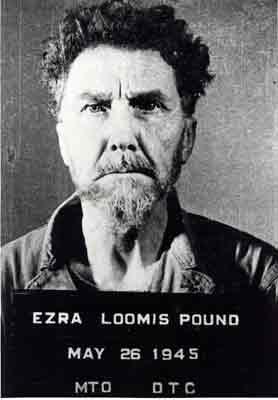
U.S. Armed Forces – Photo (Mug Shot – Ezra Pound, 1945, Italy)

Rebecca Berger – “I’ve stayed here long enough -“

I’ve stayed here long enough –
.
to no longer be the subject of neighborhood gossip, to watch a baby learn how to eat food, to notice the plethora of insects fade as the weather cooled in the winter and then make a sudden return with the heat of summer, to see new types of trees flower, to learn how to wash laundry by hand and how to clean with only bleach and boiling water, to discover that my neighbor’s husband cheats on her, and to know the noblest of reasons why she deals with it,  to eat exotic raw fruits and vegetables and not be sick, to create and love my own morning routine, to get sick and become well again, to learn the secret to making the best chai, to invite others into my house – and cook for them, to really appreciate the kindness of strangers, to wage a war against cockroaches, to see families move out and others move in, to know when to bargain – and when to just give, to love bucket showers, to meet a woman who migrated from Pakistan – and then to see her die, to be fed enough meals to feel your arms grow fat, to see  a young girl get married, to breathe pollution, to sing hindi songs, to make a home, to meet new neighbors,
.
to measure time in someone else’s context, to be just a speck of a human, to grow here just long enough to still be pulled away –  to frame yourself, and your growth on a totally different scale, is to truly feel the world a little differently.

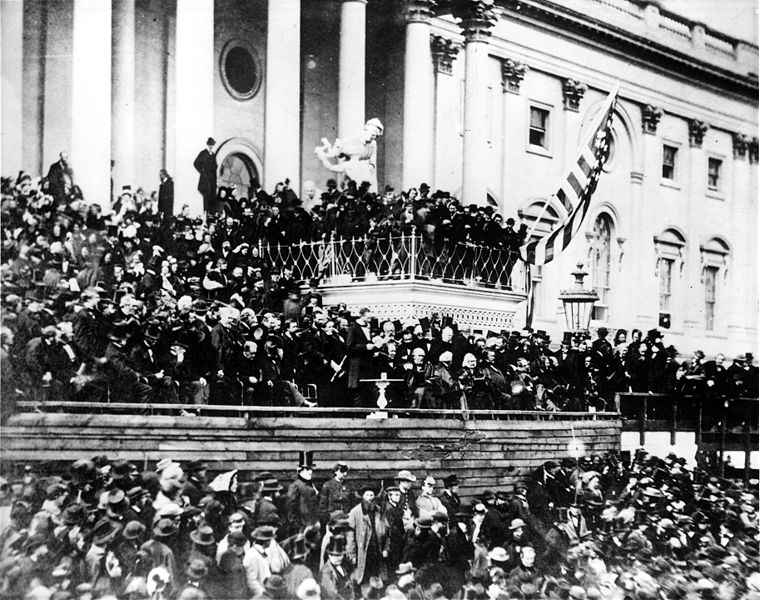
Alexander Gardner – Photo (A.L.’s Second Inaugural Address)

Sam Rempell – Poem

Berrigan Wedding Coat

As yet unburied, my friend Gerry met me at the station –
His directions a mystery, he’d said OK, I’ll come fetch you –
And took me to his new house, new at least to me.

I hadn’t seen him for ten years, though I must have thought
His name a thousand times, measured myself
Against how he might have seen me
if he’d seen me
Again.

Crossing half the upper range, New York to Chicago,
I stopped hard by Erie, Gerry in the angle against the lake,
Clad, the two of us, in coats we’d bought
To celebrate the coat
Ted Berrigan had bought
to celebrate the wedding
Of Ron Padgett, we’d thought.

Berrigan died younger than me now –
the summer I was seventeen,
summer in Colorado. Judy joined me there
the next year, then Gerry the first of us
to finish school and go. And here now,
long later, he ducks his head down
and angles across the road to collect me.

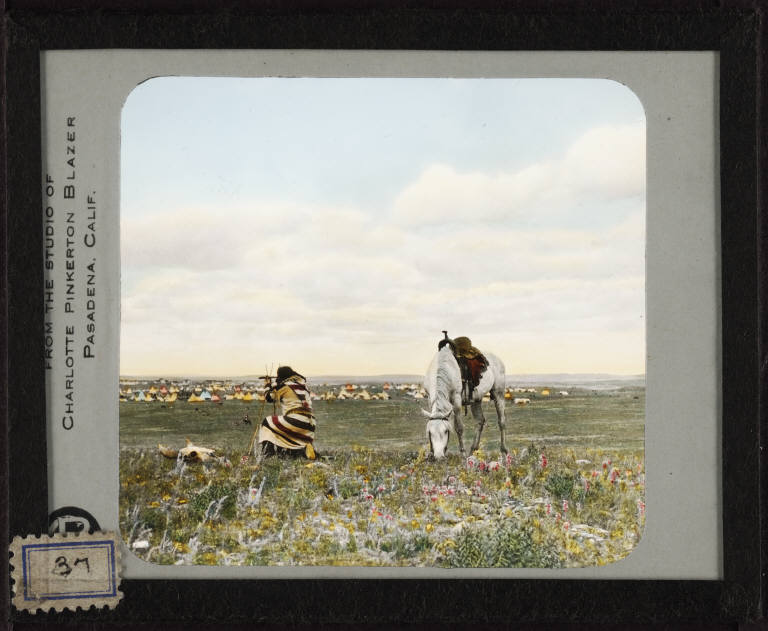
Walter McClintock – Photo (Indian man and horse)

The Editors – Libya, Obama and the Sins of Omission

Writer Jon Lee Anderson described President Obama in the New Yorker this week as a man “torn between the imperatives of rescuing Libyan innocents from slaughter and not falling into yet another prolonged war.” Quite right, we think, and an illustration of the moral challenges of statecraft and military decision-making in a world that is clearly far from grace.

There is no good option for Obama, and for our nation. Any action taken – including, specifically, the actions taken in the past ten days – will cause ugly and unforgivable harm. Certainly some innocents will die when we bomb from the sky. Certainly even those uniformed and ready-to-strike government soldiers we target, whether they be about to gas and bayonet a group of protesters or press the button to launch a rocket, count among themselves frightened young men who wear the uniform as a better alternative to exile, death or other punishments.

We cannot avoid doing grievous harm here; the question is which harm is worse – fighting against Khadaffi’s forces as they attack their own population, or standing back and doing nothing (also known in the language of national capitals as “diplomatic action.”)

Some argue that we have no “interests” at stake in Libya; one wag has gone as far as to say that the requirement for “strategic national interests” to be at issue is “axiomatic.” We take that to be something like “because I said so.”

There are questions of human dignity, of the ability to succeed, and of connection to a genuine innocent party on the ground requesting help that all have definite answers in this case. Among the tragedies of our other wars is that having acted too quickly and with too little regard for the interests and perspectives of others, we are now conditioned to say no, to hold back, to question the moral foundations of ideas like “never again.”

We note that our nation – as of this day – is acting with moderation, but acting with due force. We are, for the moment, the good guys.

Is this your new site? Log in to activate admin features and dismiss this message
Log In
Design a site like this with WordPress.com
Get started