Monthly Archives: February 2011

Elizabeth Cohen – Poem (“Seaside”)

Seaside

We are a family at the seaside,
wearing seaside clothes and hats,
seaside smiles, seaside shoes,
seaside skin, oiled to a high gloss.

If we could we would stop time now,
here, on this day before the world
unravels; the universe on its sure
implosion course.

We would find some way
to keep her tan line just like that,
the sumptuous dinner on the deck
the long shadows of umbrellas
radio dishes tuned on the sun.
Her half-devoured book,
resting on her lap, right there,
page 112,
as she drifts in daydream.

Sometimes you have to wonder what
keeps us going, gunning toward
almost certain suffering.
But look across the sand, the way
it buttresses the beach, the sky
wrapped around like a gift,
And it happens, she turns, slowly,
to look back, the shadow of her hat
lies down on her neck, so quietly,
and you see it: the reason.

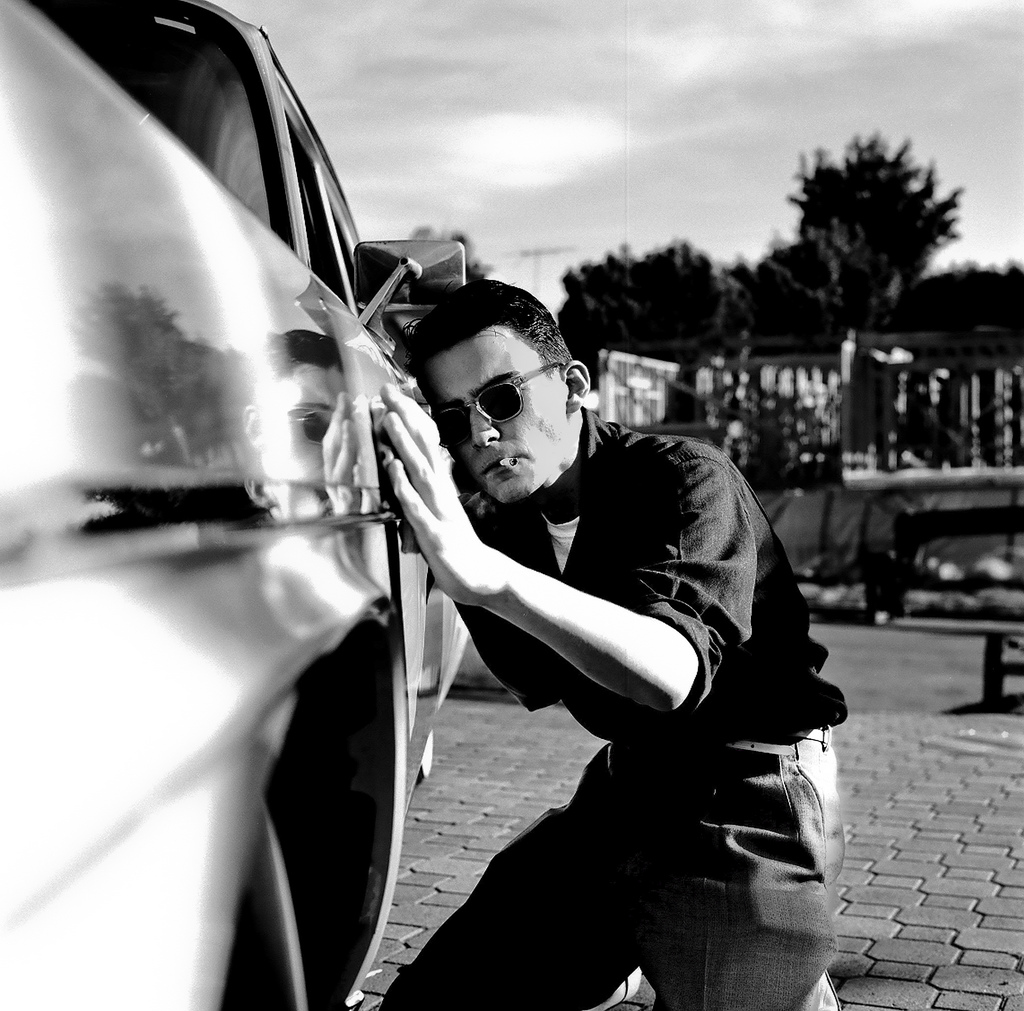
Max Solomon – Photograph

The Editors – A Glimpse at North Africa and the Middle East

Let’s remember now in the late winter of the season of revolt in North Africa and the Middle East that a few months ago, Tunisia was the first nation to Tweet and Facebook its way to a new era, the fruit of its rebellion grown by the bit and by the byte, by the tweet and by the post.


Today a Tunisian named Heny tweeted this: “To the Kasbah, young Tunisians! The revolution needs us! Free Tunisia from the remainders of the corrupt regime. The achievement is not complete yet.”


As Americans, we find a special appeal in the idea of an unfinished revolution. We remember that we were not even truly free of the British until 1812, their forts and soldiers scattered till then across our country with little regard to American sovereignty.


Indeed, not until 1865 did we end the legal institutions of human slavery within our democracy. And it was not until 1971 that the sheriff in Yazoo City, Mississippi ended his practice of personally escorting black students brave enough to show their faces at once-upon-a-time white schools off to their more expected places at the shacks and shanties reserved for African American education. (Writer Willie Morris tells that tale fully and well in his book Yazoo – written well before his opus, My Dog Skip).


What we see and what we learn today from North Africa and the Middle East are very much about our own national influence, to say nothing of our own national soul. We have a past in this country – both bloody and beautiful, full of promise yet still incomplete in its vision of what American ought to be – that we cannot afford to forget or neglect, particularly when we see its echoes resounding across the world.

Gerry Crinnin – Poem (“Provisions”)

Food and prayer and sin centered in our family squarely around the din of suppers. I have seen my sister Alice sublime drinking can beer and eating cold pizza hours before her wedding, years after her divorce. Grace at our table was so long and inclusive the dead never made it to the past or the living futured. “Eat fast,” my father wised up the bewildered. The broiled hamburger hump on Tuesday nights, onioned, served with mixed boiled frozen vegetables and apple sauce still triggers tics: The trick: drop some on the floor, hide some in the napkin, store some in the mouth, mumble up excuses to the bathroom and flush some, camouflage the rest around the plate like stations of the cross, some art. Meanwhile, Nixon might roar from my father’s milk, the older brothers snort into their forks and swallow deferments, one kidney bean at a time. My mother must have been close to heaven, overcooked and overworked and dead each night at nine. All our sins must leave this world like grated cheese for good and live on in other udders, some grumpy hungers I pray, gnawing for pasta and a piece of hard bread, the heels.

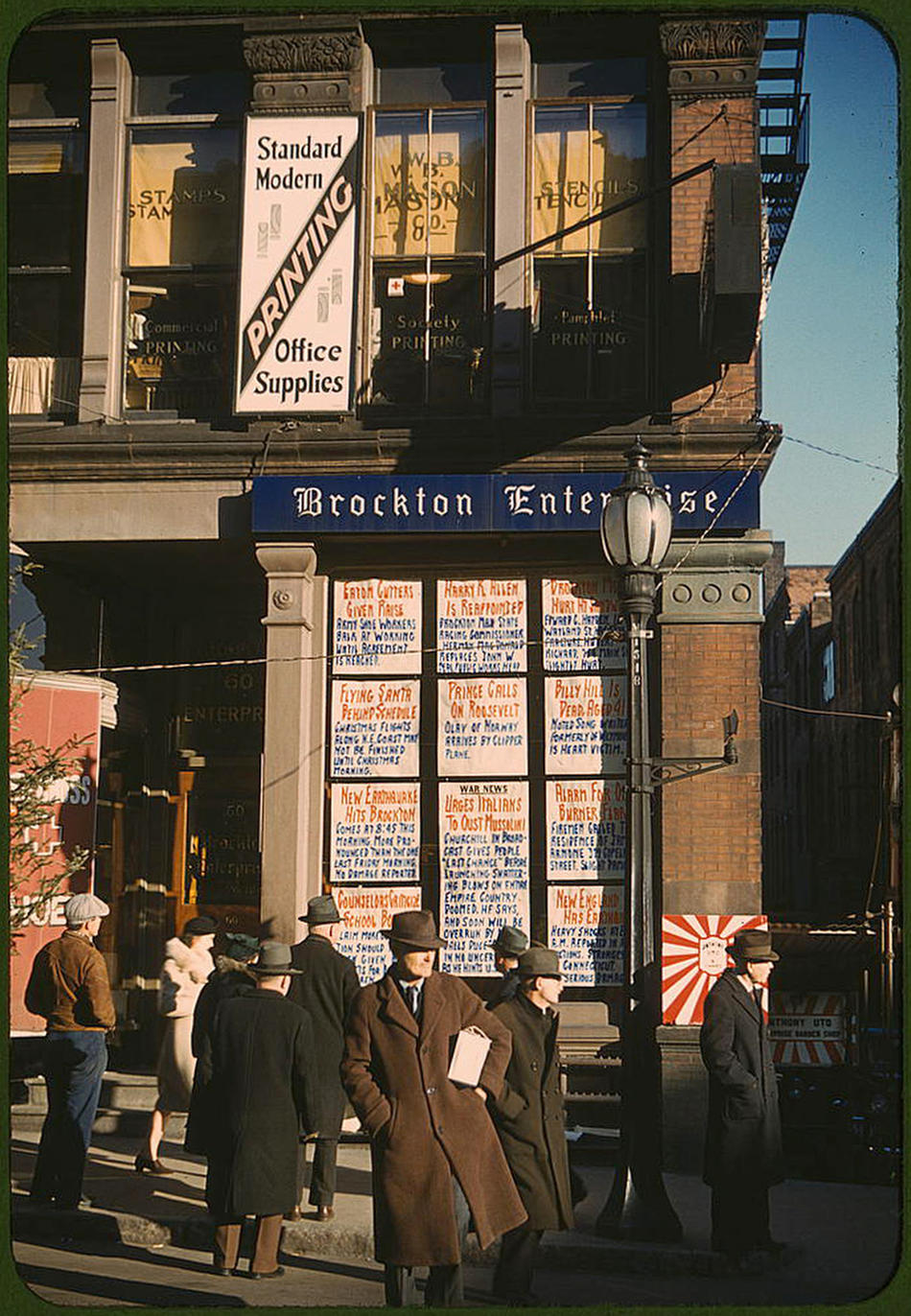
Jack Delano – Photo (Outside the Brockton Enterprise, 1940)

The Editors – Sarah Palin, Rebecca MacKinnon, and other “Friends”

We’ve been reading some of the astute comments by Rebecca MacKinnon – former CNN bureau chief in Beijing, fellow at Harvard’s Berkman Center for Internet and Society, and co-founder of http://www.globalvoicesonline.org – about Sarah Palin’s fake-name FaceBook account, a violation of the FB user agreement everyone assents to when they set up an account, and a move generally met with instant deletion when discovered.

An unpublished manuscript making its samizdat rounds in DC contains the tidbit, as well as the fake name (Lou Sarah – go figure).

Which raises some questions.

First, is this really a breach, or just a politician living more or less as we all live?

But a quick second: Is the “Sarah Palin” we know and love, hate, or try to ignore, more real or authentic than “Lou Sarah”?

And furthermore: Rebecca MacKinnon, a public figure in Internet policy circles, is on leave from various posts to finish a book right now (her thoughtful blog http://rconversation.blogs.com/ is on haitus, but still a great read even in its archive-edition status).

So we see Rebecca’s thoughts because we’re her FB friends, and they’re great. But we can’t really make them part of a conversation we’d like to share with you – literally you, the reader – because they’re only there to be seem among “friends.”

Rebecca is intentionally diminishing her posture in both the real and the virtual worlds in order to get some work done. Palin is also claiming some private space online, though she simultaneously makes herself ever-more public through her main FB page, her tweets, and more.

What MacKinnon is claiming in sequence – a smaller presence for now in order to finish her book and have a larger one later – is not all that different from what Palin is doing, though Palin is doing it all at once. She’s being both small and large, public and private, with different personas for each stance.

If that’s unattractive, it may be less because she’s dishonest – it’s hard to call a pet-name FB account the province only of scoundrels – but more because she’s impatient and unprepared for serious thinking time away from the spotlight.

Martín Espada – Poem (“Imagine the Angels of Bread”)

We pass on this poem by Martín Espada, not about a president, but about others on this Presidents’ Day, written and first published some years ago – Eds.


Imagine the Angels of Bread


This is the year that squatters evict landlords,

gazing like admirals from the rail

of the roofdeck

or levitating hands in praise

of steam in the shower;

this is the year

that shawled refugees deport judges

who stare at the floor

and their swollen feet

as files are stamped

with their destination;

this is the year that police revolvers,

stove-hot, blister the fingers

of raging cops,

and nightsticks splinter

in their palms;

this is the year

that darkskinned men

lynched a century ago

return to sip coffee quietly

with the apologizing descendants

of their executioners.

This is the year that those

who swim the border’s undertow

and shiver in boxcars

are greeted with trumpets and drums

at the first railroad crossing

on the other side;

this is the year that the hands

pulling tomatoes from the vine

uproot the deed to the earth that sprouts the vine,

the hands canning tomatoes

are named in the will

that owns the bedlam of the cannery;

this is the year that the eyes

stinging from the poison that purifies toilets

awaken at last to the sight

of a rooster-loud hillside,

pilgrimage of immigrant birth;

this is the year that cockroaches

become extinct, that no doctor

finds a roach embedded

in the ear of an infant;

this is the year that the food stamps

of adolescent mothers

are auctioned like gold doubloons,

and no coin is given to buy machetes

for the next bouquet of severed heads

in coffee plantation country.

If the abolition of slave-manacles

began as a vision of hands without manacles,

then this is the year;

if the shutdown of extermination camps

began as imagination of a land

without barbed wire or the crematorium,

then this is the year;

if every rebellion begins with the idea

that conquerors on horseback

are not many-legged gods, that they too drown

if plunged in the river,

then this is the year.

So may every humiliated mouth,

teeth like desecrated headstones,

fill with the angels of bread.

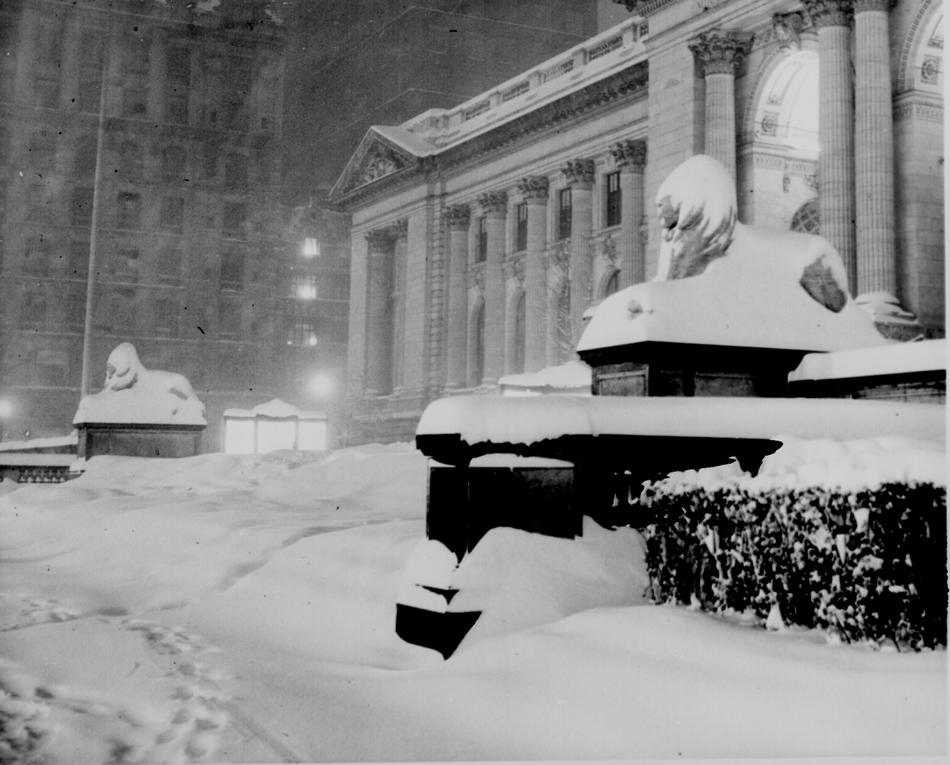
Unknown Photographer – Snow Lions, 1948

Karen Morris – “A Walk in the Park”

William is my dog. By all customary and conventional measures, Willy is not a nice dog. He is not a dog you would encourage your children to entertain. But I love him. Willy is a sad, mad dog because he cannot forget the abuses of his early doghood before his rescue.

We, like our dogs, are creatures of habit. Up to a certain degree, we nonetheless learn new tricks. Now, Willy, whose nipping victims run into double digits, has no Kaizen ambitions. But the rest of us want to learn and grow, pursue our personal and professional program of continuous improvement, even “reinvention.” Industries and organizations also develop habits, biases and precious assumptions. We talk a good deal about reinvention, but breaking up with habits is hard to do.

And here is the conundrum. Large transformational endeavors, building new and different capabilities for emergent challenges, investing in expansive skill-sets are vital but learning is always easier than forgetting. As de Toqueville lamented for the post- revolution French aristocrats “Ils n’ont rien appris de rien oublier.” They have learnt nothing because they have forgotten nothing. He implies, and surely this is also true of organizational behavior, that what you decide to relinquish and jettison can be more vital to learning and reinvention than what you try to embed as new practice.

Every Sunday, I walk my dogs in Brooklyn’s Prospect Park West. We make our familiar circuit. The parallel of strategy and budget cycles in large organizations springs to mind. There’s some unpredictability. At what point in the process will one be called upon to perform the scoop, conceal and dispose ritual. The corporate analogy abides.

It was a light-winded lucid September morning. I decided to take the road less traveled. Prospect Park is the sibling of Manhattan’s Central Park and married less well. The Manhattan match, despite difficult patches, has been more generous than the Brooklyn liaison. Prospect Park offers up her memories in dilapidated corners and dejected masonry. But we love her. So I broke my habit, to momentary canine confusion, and wandered into a quiet lakeside trail. I was thinking of Emerson, although this was no Walden Pond, of de Tocqueville, although this was no Grand Tour, and of what to make for lunch – although I rarely cook on Sundays, I like to live the fantasy. “My gift of fantasy” Einstein asserted, was more valuable than intellect. Disingenuous or not, the recognition that “genius” is sparked at the intersection of imagination and intellect is increasingly relevant to corporations seeking to innovate.

At a more prosaic intersection Willy (a.k.a. “Satan’s puppy”) slipped his leash. Now I’m thinking of the nip-vulnerable ankles of unsuspecting birdwatchers. Since William is about 170 in human years, the sprint was bursty and brief. This is when we came upon it. Ambergill: “The Lost and Found Fountain.”

The funny thing about people is our tenacious adherence to the creed of knowledge. The funny thing about organizations is their tenacious adherence to the creed of experience. We are what we know and we are the sum of what we’ve done. These conventions hold that future action and capacity can be extrapolated from this instant summation of the person. This is a seemingly irresistible thesis and encouraging in its confidence that tomorrow will be just like today; that tomorrow’s business, social, political, cultural needs can be met by yesterday’s experts. You would have to be barking mad to buy that.

Numerous surveys whose responses are inevitably imbued with the gravitas and authority of the surveyor: McKinsey, Booz Allen, The Economist etc. (that not even remotely, motley crew) exhort us consistently to innovate, to jettison received opinion, to question and create (to slip our leash). Change has changed in velocity and scale. So too must we, or we’ll be left behind. We can avail ourselves of processes to smooth the transition. The sticking point is that ex ante crisis, few businesses and even fewer successful people perceive their “core competence” as bathwater rather than baby. Faced with corporate infanticide, best to puncture the tub so the assumptions and practices of others can seep incrementally away without danger to our baby. Hell, Sartre may have concluded, had he ever had a “real” job, is other people’s habits.

My first question in assessing the innovation ambitions of any business is always “What would you never change?” This is as economic as existential as diagnoses get.

Having caught up with the capricious canine, I paused. Pausing is underrated as an action. I recommend it. I read the story on the Prospect Park Alliance guide. Ambergill was lost, literally. The waterfall had been swallowed up in the overgrowth and had disappeared for decades until its very existence was forgotten.

Imagining that which does not yet exist is the creative gymnastic that catapults innovation. When Frederick Law Olmstead, possibly the innovator of landscape architecture, and Calvert Vaux conceived and designed Prospect Park following their landmark creation Manhattan’s Central Park, the traces of the Civil War battles had not yet disappeared.

Men and boys died on the rocks and soil where this then suburban nature-scape would be. Envisioning a park out of a battlefield epitomizes transformational change.

A (civil) army of immigrant workers would hand- dig the expanse of lake, little imagining that a century after them this exquisite man-made sanctuary would be the hub of a jogging loop and that spitting, swearing men in Lycra on titanium bikes would hurtle past both battle memorials and botanical beauty unaware.

The architects did not imagine themselves in the business of transience. Projects of such ambition and scale went from good to great. A celebration of a high-growth, vibrant economy. Absorbed with our currently successful core businesses, we rarely anticipate stagnation and irrelevance. The architects could not have envisioned that urban decline and financial strife would cause Ambergill to be taken back by nature and quietly disappear.

Great design and bold intent (and the conflation of the two) do not expect obsolescence and evaporation. These are built to last. Alpha leaders of any pack must exude confidence in continuity. But the tendrils of change insinuate their way in, at first subtly, then more aggressively until it is too late. We just don’t see it coming.

William was retrieved quickly, this time. Ambergill slowly. The important feature of Ambergill’s rediscovery is that it was an accident, a lucky coincidence of another investigation. If we keep open to accident and re-discovery, we can actually systematically find new insights from apparently unrelated sources. Just because the fountain was not new does not mean its recovery was not discovery. There is innovation inside the box, if we probe and question.

That is the innovator’s, designer’s, searcher’s, investigator’s business. We form unlikely and improbable relationships with bad ideas; then forge a powerful idea from that union. We create synthetic patterns and then step outside of them, exploring another track. We get lost and see what that experience reveals. We let go of what we know in favor or what we might discover. We never cease to be surprised.

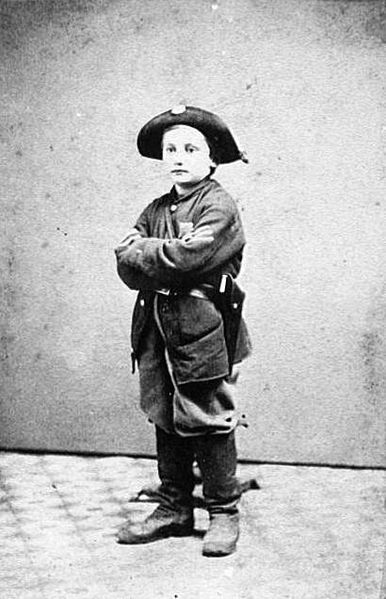
Unknown Photographer – Child Soldier of the Civil War

Is this your new site? Log in to activate admin features and dismiss this message
Log In
Design a site like this with WordPress.com
Get started