Category Archives: Politics

The Editors – What We Deserve

It’s hard to make sense of so much of the news without some kind of basis for determining what, exactly, each of us really deserves. We mean that in the most literal sense. Certainly a maid cleaning a hotel room deserves some kind of security in her own person, while a man accused of a crime is entitled, as well, to the presumption of innocence until proven guilty. The process of reconciling these seemingly-at-odds principles takes time and thought, but not much more than that. A bit of social trust is what makes it work – that and, as our thought began, a sense of what we all deserve.

John Locke laid the right foundation for all this, we think. Beginning with the idea that all of the earth had been given, collectively, by God to all of mankind, he then asked how any one of us could rightly claim a slice of it for ourselves. His thought experiment in response involved plucking a single fruit from a single tree, and taking a bite. Making that small part of creation a small part of ourselves held some propriety for him. More than we can digest would be too much; as much as we need, and can find and grasp on our own, a good amount. And the land itself had a similar logic within it. As we reach out hands into the soil, mix our blood and sweat with it, and most importantly make it better, we earn some right to that small piece of the earth.

Make it better, then, becomes our demand of those who seek our trust, and certainly our demand of those who seek our votes. Make it better.
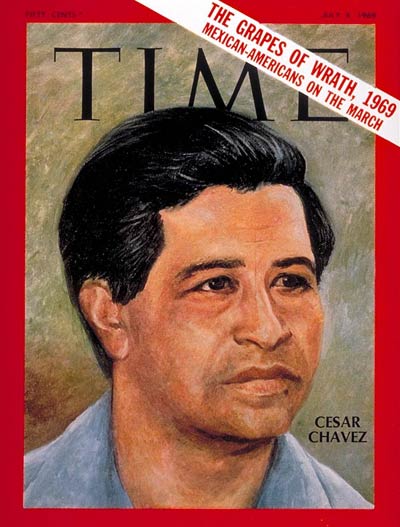
Time Magazine – Cover (Cesar Chavez, July 4, 1969)

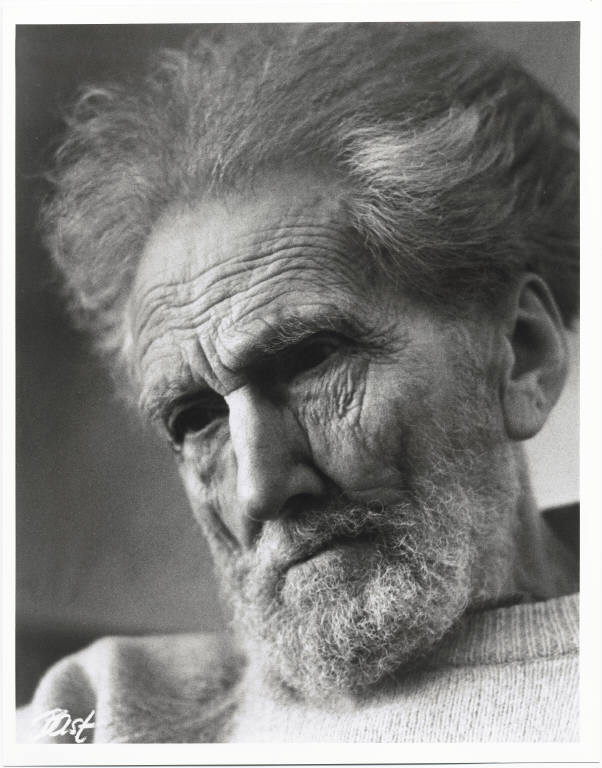
Karl-Heinz Bast – Photograph (Ezra Pound)

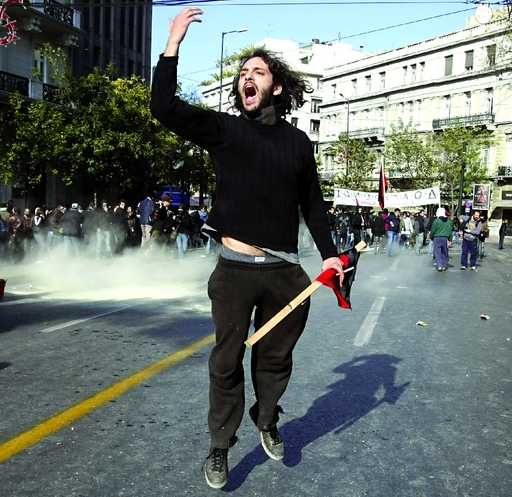
Mario Tronti – Photo (Greek Protester Jumps)

Robinson Jeffers – Poem (“Be Angry at the Sun”)

That public men publish falsehoods
Is nothing new. That America must accept
Like the historical republics corruption and empire
Has been known for years.

Be angry at the sun for setting
If these things anger you. Watch the wheel slope and turn,
They are all bound on the wheel, these people, those warriors,
This republic, Europe, Asia.

Observe them gesticulating,
Observe them going down. The gang serves lies, the passionate
Man plays his part; the cold passion for truth
Hunts in no pack.

You are not Catullus, you know,
To lampoon these crude sketches of Caesar. You are far
From Dante’s feet, but even farther from his dirty
Political hatreds.

Let boys want pleasure, and men
Struggle for power, and women perhaps for fame,
And the servile to serve a Leader and the dupes to be duped.
Yours is not theirs.

Peter Temes – The Teacher’s Vocation

I was at party recently – a fancy party. Many of the attendees were graduates of the same Ivy-League college, and they had their catching up to do. One cluster was typical – a young doctor, a lawyer and an investment banker talking with my friend, a teacher. They talked about spouses, vacations, missing old friends, and an escapade or two from their undergraduate days. Then the banker made some efforts to lure the teacher into confessing how little she was actually paid. And then she told them – literally causing the lawyer to gasp. But she displayed that happiness that wins any argument, and her old classmates felt just a little bit embarrassed in the end, just a little bit shaken to have forgotten the deep good fortune of doing what we love, and doing it well.

When I think back on that party, I think of the teachers who start every school year shutting their classroom doors and telling their students, “We are all so, so lucky to be here together,” and really meaning it.

I think of the people I know who haven’t been able to give up the social prestige of other jobs, or the higher salaries, or the sense that their parents or their siblings or their neighbors might think less of them if they became full-time teachers, and I feel even luckier myself. I never have a moment of doubt about the importance of my work, and never a moment of wishing I was reviewing contracts for a living, or building houses, or even healing the sick. My calling as a teacher keeps me deeply connected to young people whom I can help, and who help me; whom I can teach, and learn from; who surprise me every day, and allow me to be the version of myself that makes me most proud.

I think, also, of all those teachers who have no shortage of bad days, chilly colleagues, unthinking supervisors, and never enough dry-erase markers no matter how persistently they requisition or how many they buy. I think of how we can experience that terrible day, or that class that just does not work, or the student who will not recognize his own ability, and still feel that little flame of good fortune, of pride in our work, of knowing that we are doing the work we are here to do, flicker back on like a light in the darkness, or a fire on a cold night. Like most great callings, being a teacher can be difficult and at times thankless, but it remains truly a great vocation, and a great anchor for any man’s or any woman’s life.

Len Davis – Teaser (“Gaining a Daughter: A Father’s Transgendered tale”)

The beginning of an important – and very engaging – essay by my friend Len Davis, from The Chronicle of Higher Education, a few years ago.

The full essay is here: http://www.lennarddavis.com/downloads/gainingadaughter.pdf – PT

I look around and find myself, strangely enough, in the women’s lingerie section of the Kmart in an upstate New York town. I am with my 19-year-old son, who is comparison shopping for a pair of black tights. Some farm ladies are regarding us with dubious glances. My son asks if I think medium is too large for him. He stands at about 5 feet 11 inches. I really have no idea what will fit him. Trying to be helpful, I suggest that he might want to wear the fishnet stockings, which seem to me a bit more goth, but he sticks with the regular
ones. Then we move on to the cosmetics section for lipstick and hair dye. As I help him pick out a L’Oreal shade called Parisian Black, I wonder to myself how I got here.

How indeed? A few days earlier, my son had arrived back from his first year at college. The following morning, he sat me down at the kitchen table and announced that he had a big thing to tell his mother and father. My wife was on the telephone, and as we waited for her to finish talking, my son whispered, “I’m getting married.” Then he added, “No, just kidding.” He was jumpy with nervous intensity. When my wife sat down, he spoke: “I’ve been thinking about this for a long time, and I wanted to tell you — I’m transgendered!” He looked pleased with himself and somewhat triumphant. My wife and I looked at each other, confused and horrified.

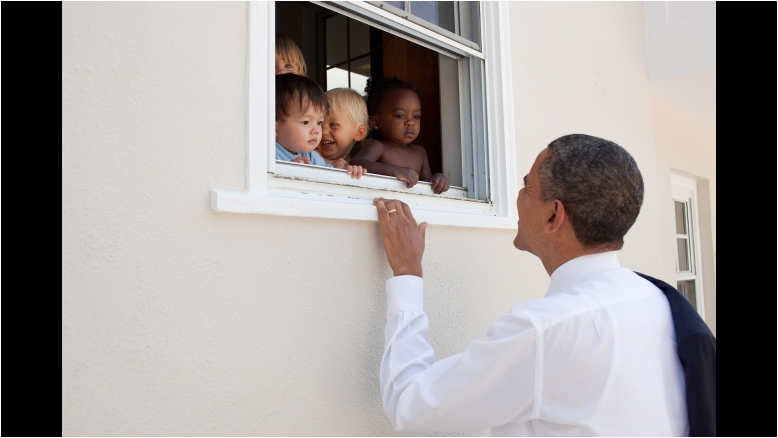
Pete Souza – Photo (Obama at Window with Children)


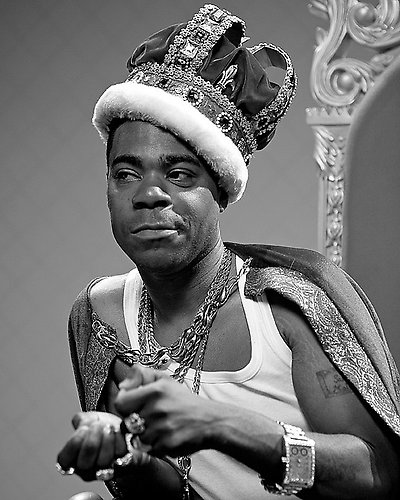
The Editors – Tracy Morgan Thinking Out Loud

Tracy Morgan is an unusual kind of American actor. He’s seems at first glance to be the spilled-upon, not the spiller: the Costello, not the Abbot. But he’s more than that: his recurring character is not only aware of being a character, but demands that we pay for our flashes of superior feelings, rising so quickly we cannot stop them though we know better, with the follow-on thought that we’re being judged for our condescension. His character is nuts, but more than nuts, and nuts for a reason. The audience begins to realize that we are that reason – maybe this unstable character is not performing for us, but as us, or our worst version of our collective self, debased because that’s what it seems to take to win some amount of collective self-approval, or at least self regard of any genuine kind.

And so the fun-house mirrors of ironic intent wrap around his homophobic remarks. Is he playing a man with those ugly thoughts? If so, why is he playing him so well? And why do we watch – not only in spite of, but perhaps because of our revulsion.

The idea of turning away – personally, collectively, immediately – seems impossible. The notion of fighting Morgan on the ground of the literal meaning of what he said, and the seeming commitment behind the words, is ultimately self-mocking. We find ourselves right back to the fundamental question of Morgan’s comedy – does he really mean, or even understand, what he’s saying? And that, alas, seems to be the almost the same as the fundamental question of American public life: Do we really mean, or even understand, what we say day in and day out, about who we are as a nation?

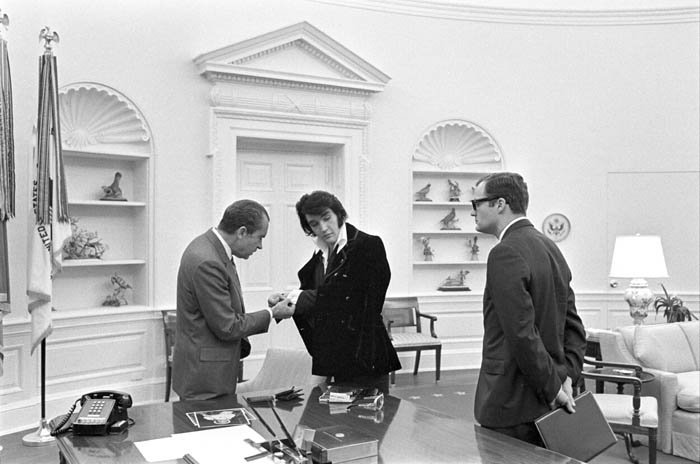
Oliver F. Atkins – Photograph (Elvis Presley and Richard Nixon, in the Oval Office) (National Archives)

Is this your new site? Log in to activate admin features and dismiss this message
Log In
Design a site like this with WordPress.com
Get started